Resource Contention Across Projects


Resource Contention Across Projects
Why Dashboards Don't Fix It
Resource contention happens when two or more projects need the same person, team, or equipment at the same time. Most tools address this by giving managers visibility — dashboards, utilization percentages, and heatmaps that show who's overbooked. Visibility helps people see a conflict exists, but it doesn't resolve the conflict or protect the schedule from it. A separate approach, used in critical chain scheduling, builds resource availability directly into how the schedule is calculated, so conflicts are resolved as part of building the plan rather than discovered afterward by someone reading a report.
Two Different Problems Wearing the Same Name
"Resource contention" gets used to describe two related but distinct situations. The first is a scheduling conflict: two tasks, in two different projects, both need the same specialized person on the same day, and only one can actually happen. The second is overallocation: a person has been assigned more total work than they can complete in the time available, even if no two tasks technically overlap on the calendar.
Most resource management tools are built to detect and display both situations after they exist in a plan — a utilization report shows a person at 140% capacity, or a heatmap flags a week where three projects all need the same engineer. This is useful information. It's also, by construction, downstream of the plan already having been built without that constraint in mind. Someone has to notice the report, then manually decide which project waits, which task gets delayed, or who works overtime.
Why Visibility Alone Doesn't Resolve the Conflict
A dashboard that shows a resource is overbooked doesn't decide what happens next. That decision — reprioritize, delay, add capacity, or push through with overtime — still has to be made by a person, project by project, often under pressure and often reactively, close to the point where the conflict actually bites. In organizations running many projects at once, this creates a recurring, manual negotiation over the same scarce people, repeated every time a new conflict surfaces.
This isn't a failure of the tools involved. It's a structural consequence of building the project schedule first, without resource availability as an input, and only checking for conflicts afterward. Any conflict found this way has to be resolved as an exception, after the fact, rather than as something the original schedule already accounted for.
Building Resource Availability Into the Schedule Itself
An alternative approach treats resource availability as an input to the scheduling calculation, not a check performed on the output. Instead of asking "does this plan create any conflicts," the scheduler asks "given what these people can actually do, and when, what sequence of work is genuinely achievable" — and produces a schedule that already reflects the answer.
This shifts contention resolution from a recurring manual process to a calculation performed once, and recalculated automatically whenever priorities or resource availability change. By accounting for resource limits, it also tends to produce a more honest estimate of when work will actually finish than one that assumes unlimited availability and gets corrected only when conflicts are discovered.
You Don't Have to Model Every Resource to Get the Benefit
Building resource availability into a schedule can sound like it requires exhaustively modeling every person, skill, and piece of equipment across every task in every project — a significant, ongoing maintenance burden that's reasonable to hesitate over. That level of completeness isn't necessary to get most of the practical value.
Modeling every resource in an organization is genuinely heavy maintenance work, and it isn't the recommended starting point even in mature critical chain implementations. A more practical approach is to model only the resources that are plausible organizational bottlenecks — the specific skills or equipment likely to be shared across multiple active projects — and leave resources unlikely to cause contention out of the model entirely. This produces a schedule that's directionally accurate rather than exhaustively precise: it won't account for every conceivable resource conflict, but it will surface the conflicts that are actually likely to affect delivery, which is where most of the practical value is concentrated.
This tradeoff is usually worth making deliberately. A schedule that models its two or three genuine constraint resources well is far more useful for predicting bottlenecks and making early, informed decisions than a schedule that either models nothing (and misses contention entirely) or attempts to model everything (and becomes too heavy to maintain as an ongoing practice). Starting narrow, and expanding resource modeling later if a new bottleneck emerges, is a reasonable and common way to adopt this approach incrementally.
Is Targeting 80% Utilization the Right Way to Prevent Resource Conflicts?
A common heuristic in resource management is to plan people at roughly 80% utilization rather than 100%, leaving headroom to absorb unplanned work, interruptions, and the inevitable friction of real execution. This is reasonable general guidance, and it addresses a real problem: planning anyone at 100% utilization leaves no room for anything to go wrong, which all but guarantees conflicts the moment reality deviates from the plan even slightly.
The limitation is that a utilization target is an aggregate number, averaged across a person's total workload — it doesn't identify which specific project, which specific week, or which specific task is actually at risk of a conflict. Two people can both sit at a comfortable 80% utilization overall while one of them is scheduled at 150% for a single critical week that happens to matter enormously for a specific project's delivery date, and the aggregate number won't show it. An 80% target is a reasonable organization-wide safety margin; it isn't a substitute for knowing, at the schedule level, exactly when and where a specific resource conflict will actually occur.
Resource-constrained scheduling and a utilization target aren't competing approaches — they answer different questions. The utilization target is a general policy about how much headroom to plan for. Resource-constrained scheduling identifies the specific conflicts, on specific dates, for specific people, that no aggregate percentage can surface on its own.
A Common, Costly Modeling Mistake: Splitting People Fractionally
When a person is genuinely shared across two projects — say, 50% of their time nominally allocated to each — a common instinct is to model that person as available at 50% capacity on each project's tasks, and size task durations accordingly. This produces a subtle but serious problem: it doesn't model what actually happens when someone splits attention across two active efforts. In practice, a person working two things at once doesn't simply take twice as long on each; they also pay a cost every time they switch between them, and each task ends up stretched out in calendar time even though the total hours might match.
A more accurate approach avoids fractional-time modeling for this kind of split. Instead, each task is modeled as needing the person at 100% for its full duration, and the scheduling calculation itself determines the actual sequence — effectively deciding which task the person works first, and when they become available for the second — rather than assuming both proceed simultaneously at half-speed. This produces a schedule that reflects how shared people actually work in practice: on one thing at a time, with the conflict resolved by sequencing rather than by dividing their attention on paper.
Modeling Skills, Not Named Individuals
A related distinction matters for any organization managing resource contention across more than a handful of projects: whether the resource pool is modeled by named individual ("Alex") or by skill and role ("Senior Software Engineer"). Modeling by named individual means every personnel change — someone leaves, gets promoted, or moves teams — requires reworking every schedule that referenced them. Modeling by skill or role instead lets a scheduling system treat any qualified person as able to fill a given task, giving it the flexibility to shift work as circumstances change without manual rework every time a specific person's availability changes. Specific individuals can still be assigned during execution once a task is actually being worked, but the underlying schedule structure doesn't depend on any one named person remaining available exactly as originally planned.
When Contention Is the Real Constraint, Not a Symptom of Something Else
A team that looks constantly overloaded is often assumed to have a headcount problem — the response is to hire more people. This is sometimes correct. But adding capacity to a system where the real issue is unmanaged resource contention often produces disappointing results, because new capacity gets absorbed by the same conflicts and switching costs that were slowing delivery before the hire. Before concluding that a shortage of people is the constraint, it's worth checking whether existing capacity is actually being protected and sequenced effectively, or whether it's being fragmented across competing, uncoordinated demands.
Common Questions
- What is resource contention in project management?
- Resource contention occurs when two or more projects or tasks require the same person, team, or equipment at the same time, and only one can actually proceed. It's distinct from overallocation, where a person has more total assigned work than they can complete, even without a scheduling overlap.
- How do you resolve resource conflicts between projects?
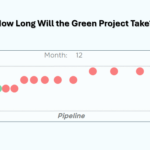
- Resource conflicts can be resolved reactively, after a dashboard or utilization report reveals them — typically through reprioritization, delay, or added capacity — or proactively, by building resource availability into the project scheduling calculation itself, so the resulting schedule doesn't create the conflict in the first place. Portfolio modeling tools like ProChain’s Fusion Pipeline enable the organization to model the likely impact of resource constraints across an entire portfolio of projects.
- Does a resource management dashboard actually prevent overallocation?
- A dashboard can reveal that overallocation exists, but it doesn't resolve it. Someone still has to interpret the report and manually decide how to reprioritize or reallocate. Preventing overallocation, rather than just detecting it, requires resource availability to be part of how the schedule is built, not just something checked against it afterward.
- Does resource-constrained scheduling require modeling every resource in the organization?
- No. Modeling every resource is heavy, ongoing maintenance work and isn't the recommended approach even in mature implementations. Most of the practical benefit comes from modeling only the resources likely to be genuine bottlenecks — specialized skills or equipment shared across multiple active projects — while leaving resources unlikely to cause contention out of the model.
- Is targeting 80% utilization enough to prevent resource conflicts?
- It helps as a general safety margin, but it isn't a substitute for identifying specific conflicts. An 80% utilization target is an aggregate number that doesn't show which specific week or task actually has a resource conflict — a person can sit at a comfortable 80% overall while being critically overbooked for one important week that a utilization average won't surface.
- Is hiring more people the right fix for chronic team overload?
- Sometimes, but not always. If the underlying issue is unmanaged contention or switching costs from shared resources being split across too many simultaneous efforts, added headcount tends to get absorbed by the same conflicts rather than resolving them. It's worth diagnosing whether existing capacity is being fragmented before assuming the constraint is a shortage of people.
The Short Answer
Resource contention is a scheduling problem, not just a capacity or reporting problem. Tools that surface contention through dashboards and utilization reports help people see conflicts, but resolving them still requires manual, reactive decisions. Building resource availability directly into how a schedule is calculated — including avoiding common mistakes like modeling shared people as fractionally available rather than sequenced — resolves the conflict as part of planning the work, not after the plan is already built. This doesn't require modeling every resource: focusing on the small number of genuine bottleneck resources is usually enough to surface the contention that actually matters, without taking on the maintenance burden of an exhaustive model. This approach to scheduling is one part of critical chain project management — see Critical Path vs. Critical Chain for the full mechanical comparison, and The Multitasking Penalty for the specific cost of splitting a shared person's attention across simultaneous tasks.