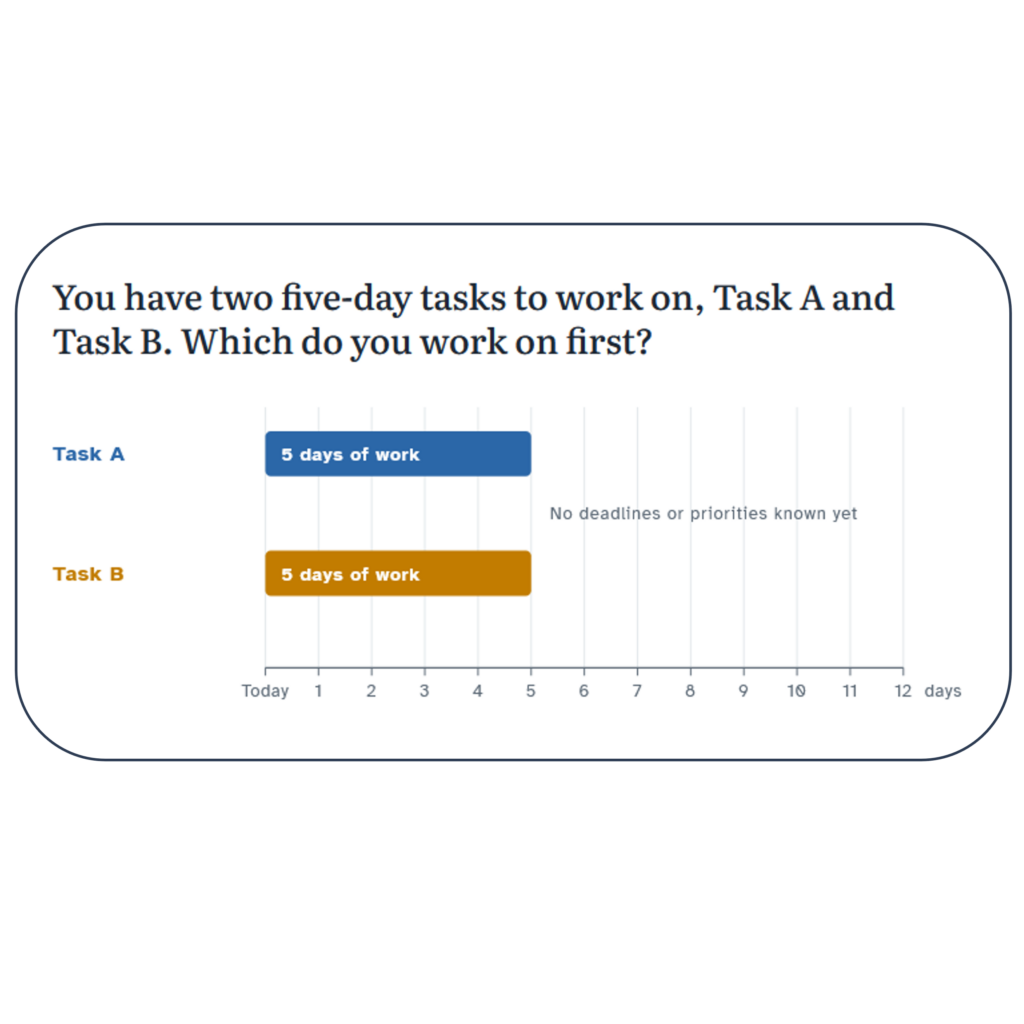
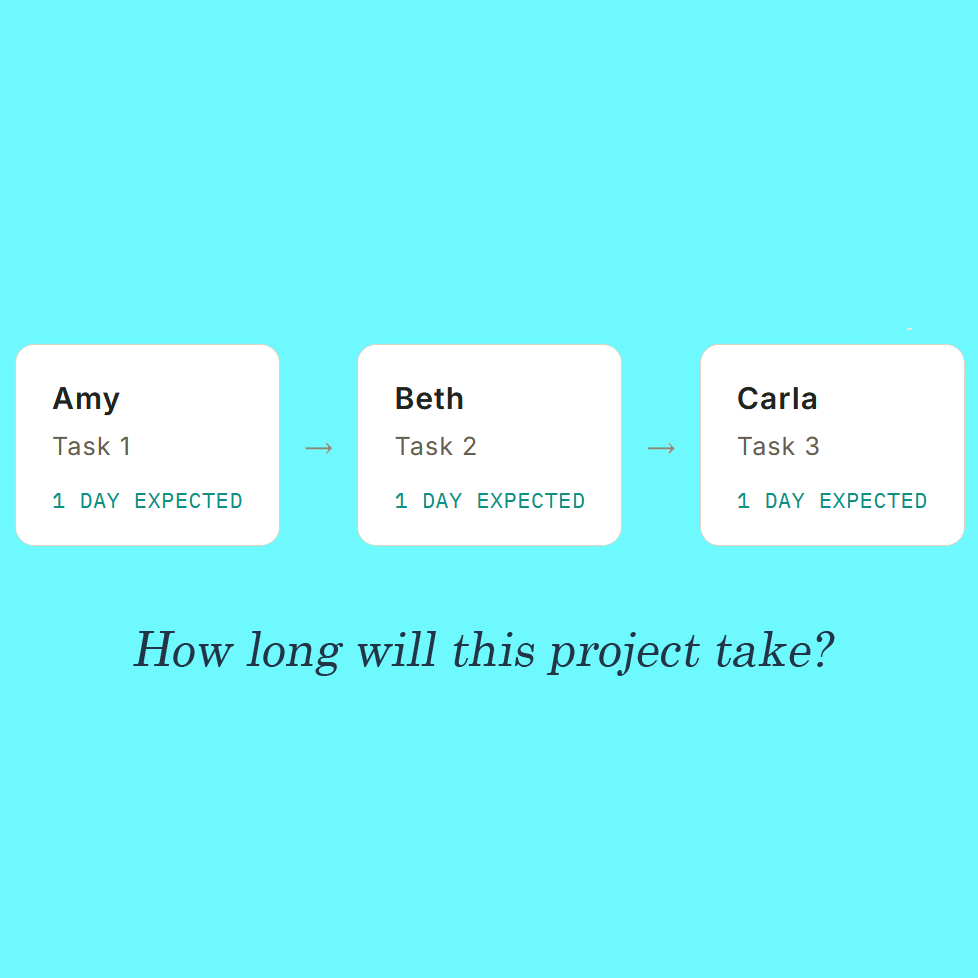
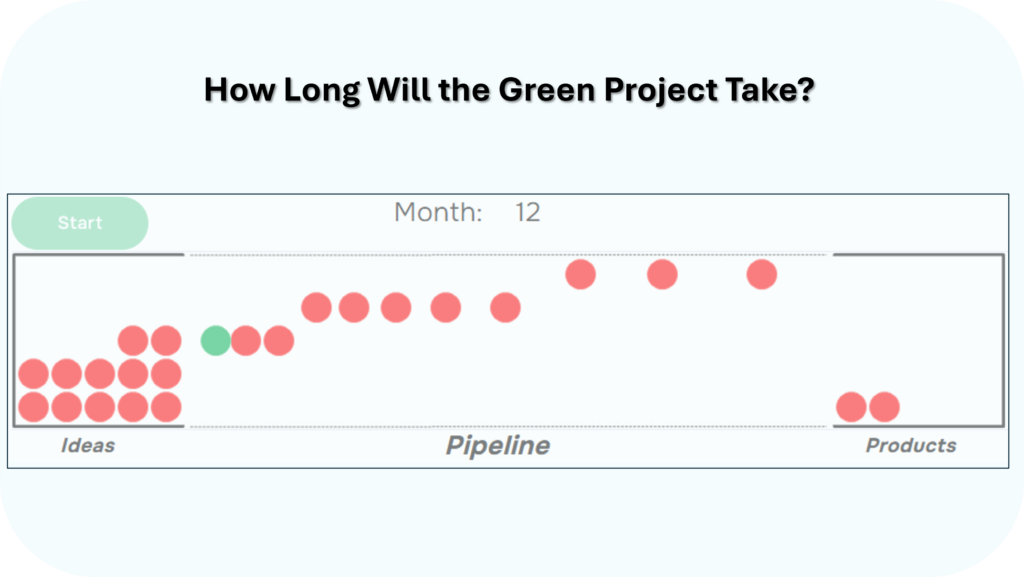
Take this quiz to gain insights into different methods of prioritization.
Tunnel Vision
Regaining Control of Pharma R&D Program Delivery
Delays in drug development cut roughly $500,000 per day from a typical program’s patent-protected earning window (Tufts CSDD, 2024). Many delays are internal and could be avoided with a different…
Critical Chain Overview
Planning the Project Project workers face a difficult challenge: they have to create schedules that will never be correct. Task deadlines can only be met if they have lots of…
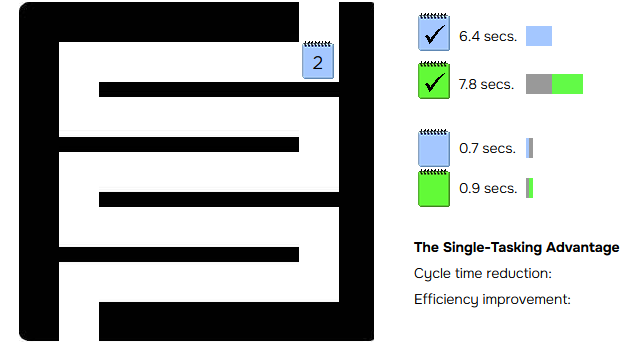
The Multitasking Game
Click here to learn about the effects of multitasking!
Uncontrolled Project Starts
Play this game to understand the impact of too many active projects.
Going with the Flow
Over the past few years, the concept of “Flow” has become more and more popular in Critical Chain circles. The basic concept is easy: value “flows” from an organization in…
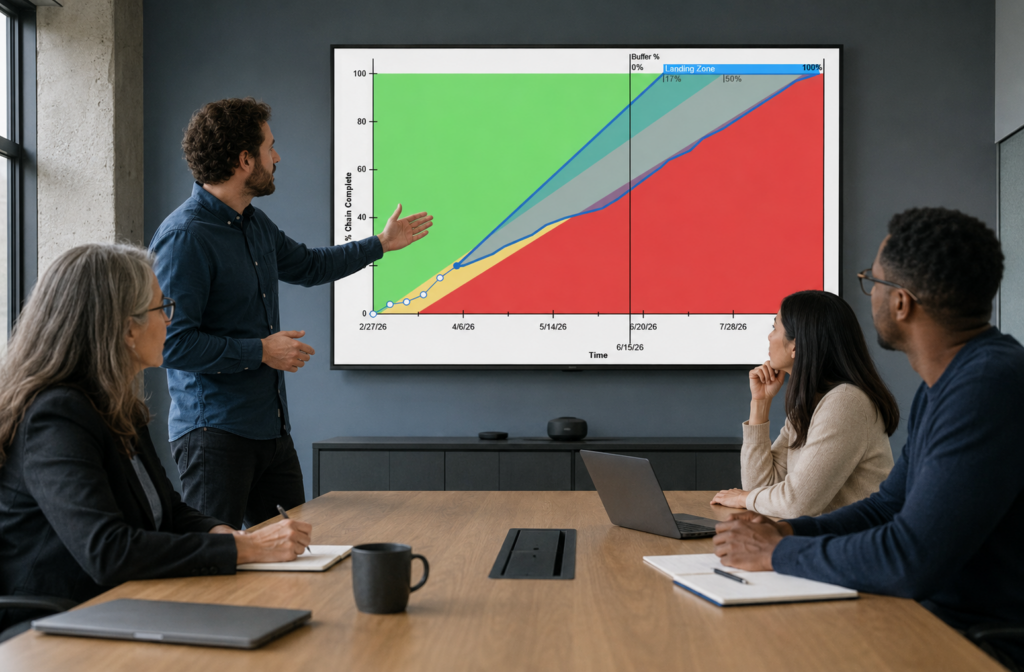
Fever Chart Regions
I am sometimes asked how one should decide where the red, yellow, and green regions for a fever chart should go. In this post I will talk about the basics.…
Earned Value and Critical Chain
Two questions were asked on the LinkedIn “Earned Value Management” forum: “Q1. What are the WEAKNESSES and LIMITATIONS of EVM? Q2. Can EVM schedule forecasting methods provide us RELIABLE EARLY…
A Culture of Dates
In our time-conscious world, we’re used to thinking in terms of dates. What’s my calendar for today? When is the meeting, the doctor’s appointment, the television program? We rush to…
What’s New in Fusion Online 15.6
This video describes the great new features in Fusion Online version 15.6: interactive guides, kanban boards, automatic backups, and much more.
What’s New in Fusion Online 15.5
Fusion Online and Fusion Desktop/Pipeline version 15.5 are out! This video describes the great new features in Fusion Online, including Network Diagram enhancements, Jira interface, and template libraries.
What’s New in Fusion Online 15.4
This video describes the new features in Fusion Online version 15.4, including a Network Diagram and Calendars!
What’s New in Fusion Online 15.3
This video gives a short overview of the new features included in the recent version 15.3 release of Fusion Online, including resource graphs and project templates. Check it out!
Practical Values: How to Conduct Better Meetings
What’s the biggest source of headaches and wasted time in your company? For many people, it’s the frequent, interminable meetings. People often feel like they’re spending all their time in…
What to Look For in Critical Chain Project Management Software
How Tools Compare Critical chain project management (CCPM) software schedules projects using both task dependencies and resource availability, calculates and monitors schedule buffers, and typically visualizes project health through a…
Why Projects Stay on Track – Until They’re Not
Why Project Status Says "On Track," Right Up Until It Isn't A project can show green status for months and still miss its delivery date by weeks, without anyone lying…
Critical Path vs. Critical Chain
What Critical Path Scheduling Doesn't Account For The critical path is the longest sequence of dependent tasks in a project schedule, calculated from task durations and logical dependencies alone. The…
Resource Contention Across Projects
Why Dashboards Don't Fix It Resource contention happens when two or more projects need the same person, team, or equipment at the same time. Most tools address this by giving…
The Multitasking Penalty
Why "Urgent" Work Is Often Slower Work Switching between tasks carries a measurable performance cost, even when the switch is planned and expected. Research on task-switching has found productivity losses…
The Low-Risk Adoption Path
Do You Have to Fully Adopt Critical Chain to Get Value From Fusion Online? No — and this isn't a loophole in the methodology, it's a deliberate capability ProChain built…
This website uses cookies to improve your experience. If you continue to use this site, you agree with our terms. Privacy Policy